
How to Choose the Right Fitting Method for Your Plumbing System
In plumbing systems, the choice of connection method has a direct impact on installation efficiency, sealing performance, system reliability, and long-term maintenance costs. Among the most commonly used solutions, compression fittings and press-fit fittings stand out as two popular and widely applied methods.
Although both can create secure and leak-free joints, they differ significantly in the installation process, application scenarios, long-term performance, and cost structure. This article provides a detailed comparison of compression and press-fit connections to help you choose the most suitable option for your specific project needs.
What Are Compression Fittings?
Compression fittings are mechanical pipe connections that typically consist of a fitting body, a compression nut, and a compression ring (also known as an olive). During installation, tightening the nut compresses the ring around the pipe, forming a tight seal without soldering, welding, or heat.
Advantages of Compression Fittings
Easy Installation
Only basic hand tools such as adjustable wrenches are required, making compression fittings ideal for DIY users and small repair jobs.
No Special Tools Required
There is no need for expensive press tools, resulting in low initial investment costs.
Reusable and Adjustable
Compression fittings can be disassembled and reassembled, making them convenient for maintenance, system modifications, or future adjustments.
Wide Material Compatibility
They can be used with copper, plastic, and PEX pipes, offering good versatility across applications.
Disadvantages of Compression Fittings
Lower Efficiency for Large Projects
While installation is straightforward, manually tightening each fitting becomes time-consuming in large-scale installations.
Potential for Loosening and Leaks
If not tightened properly or exposed to vibration and temperature fluctuations, compression fittings may loosen over time, leading to leaks.
Not Ideal for High-Pressure Systems
Compression fittings are generally not recommended for high-pressure or high-safety-demand systems.
What Are Press-Fit Fittings?
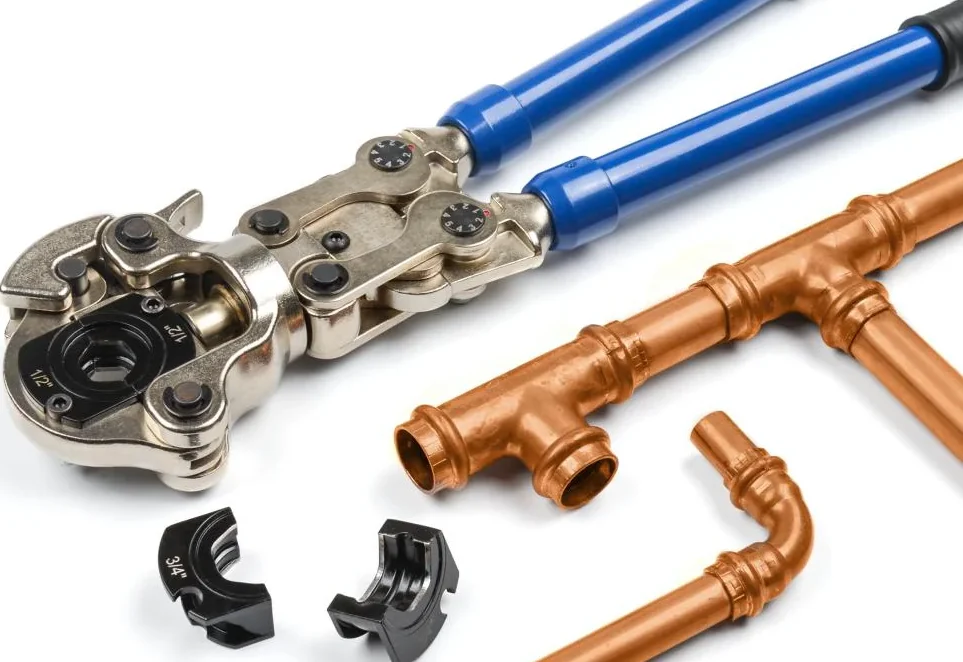
Press-fit fittings are joined to pipes using specialized press tools—hydraulic, electric, or manual. These fittings typically incorporate an O-ring seal, which forms a permanent, secure, and leak-proof connection once pressed.
Advantages of Press-Fit Fittings
Fast Installation
Each connection can be completed in seconds, making press-fit fittings ideal for large-scale and time-sensitive projects.
Flame-Free and Safe
No soldering or open flames are required, enhancing safety—especially in confined spaces or commercial buildings.
Highly Reliable and Leak-Resistant
The standardized pressing process minimizes human error and delivers consistent sealing and pressure resistance.
Suitable for High-Pressure Applications
Press-fit fittings are widely used in water supply systems, heating systems, HVAC installations, and certain industrial applications.
Low Maintenance Requirements
Once installed, press-fit connections require little to no maintenance throughout their service life.
Disadvantages of Press-Fit Fittings
Requires a Dedicated Press Tool
The need for a press tool increases initial investment, particularly for users who do not already own one.
Non-Adjustable and Non-Reusable
After pressing, the connection becomes permanent and cannot be repositioned or reused.
Higher Initial Cost
Press-fit fittings generally cost more per unit than compression fittings, though labor savings often offset this difference.
Key Differences Between Compression and Press-Fit Connections
Installation Method
Compression fittings can be installed with basic hand tools and are suitable for DIY use, while press-fit fittings require professional press tools and trained operators.
Tool Requirements
Compression fittings involve minimal tool investment, whereas press-fit systems require dedicated press equipment.
Installation Speed
Press-fit connections are significantly faster in large-scale projects, while compression fittings take more cumulative time due to manual tightening.
Reliability
Both systems can perform well when installed correctly, but press-fit fittings offer greater long-term consistency due to their controlled pressing process.
Accessibility and Maintenance
Compression fittings can be disassembled for future access, whereas press-fit fittings form permanent connections.
Cost Structure
Compression fittings have lower material costs but higher labor input; press-fit fittings have higher material and tool costs but lower installation labor.
Applications
Compression fittings are commonly used for appliance connections, end-point plumbing, and localized repairs. Press-fit fittings are better suited for full plumbing systems, commercial buildings, and high-performance installations.
Factors to Consider When Choosing the Right Fitting
Project Size
Small or DIY projects typically benefit from compression fittings, while large installations gain efficiency from press-fit systems.
Installer Skill Level
Compression fittings are easier for non-professionals, whereas press-fit systems require proper training and tool familiarity.
Future Accessibility
If future disassembly or system modification is anticipated, compression fittings are the better option.
Budget Planning
Consider not only fitting costs but also tool investment and labor expenses.
Application and Compliance
Always ensure the selected fitting meets application requirements and complies with local plumbing codes and standards.
Compression and press-fit fittings each offer distinct advantages, and neither solution is universally superior.
Compression fittings excel in flexibility, lower upfront cost, and ease of maintenance, making them ideal for smaller projects.
Press-fit fittings stand out for their speed, durability, and long-term reliability, making them the preferred choice for modern plumbing systems and large-scale installations.
If you are upgrading a plumbing system or planning a new project, investing in high-quality press tools and fittings can deliver long-term efficiency and performance benefits.
Explore the full range of SUMA press tools and fittings to find the right solution for your plumbing needs.