Welding:
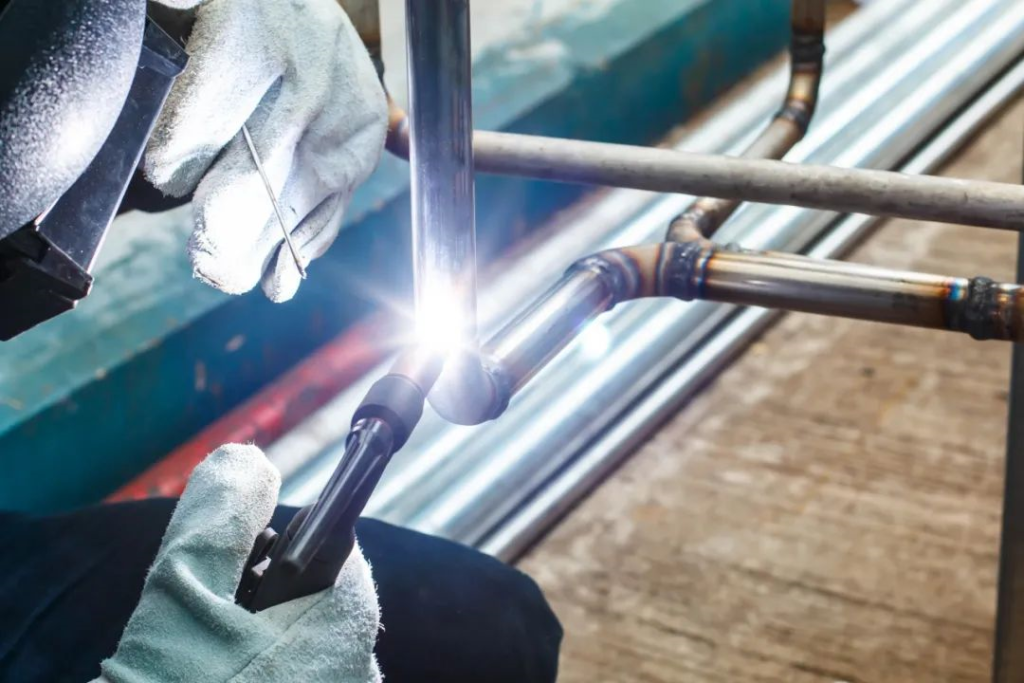
Definition: The fusing of copper tubing to a joint by melting the metal at a high temperature (or using a solder) to form a permanent connection. Common methods include brazing and fusion welding.
Tools Required: soldering torch, solder or hard soldering rod, flux, and protective equipment.
Advantages:
High strength: the strength of the welded joint is close to that of the base material, resistant to high pressure and vibration.
Good sealing: fully fused, no risk of leakage, suitable for high-precision systems.
Long-term reliability: high temperature and corrosion resistance, long life.
Adaptable to complex shapes: flexible to handle connections at different angles or positions.
Disadvantages:
Complicated operation: specialized equipment (welding torch, shielding gas) and technicians are required.
Safety hazards: high temperatures may cause fires; ventilation is required.
Irreversible: disassembly requires cutting, and high maintenance costs.
Heat-affected area: High temperatures may change the local properties of copper tubes.
Typical Applications: Mainly used in high-pressure and high-temperature systems such as refrigeration systems, gas piping, industrial piping, and medical gas lines, where strong and durable joints are required.
Crimping:
Definition: The use of a crimping tool to compress a metal ring and secure it around pipes and fittings to form a watertight seal without heat. Common methods include cold crimping and hydraulic crimping.
Tools Required: crimping tool, crimping ring, pipe cutter, and deburring tool.
Advantages:
Simple to operate: no heat or complex equipment required, suitable for confined spaces.
Fast and efficient: can be completed in seconds, suitable for batch work.
Safe and environmentally friendly: no open flame or smoke, suitable for flammable environments.
Removable: part of the crimping method allows disassembly, easy for maintenance.
Disadvantages:
Dependence on joint quality: sealing and strength depend on the precision of the joint and tooling.
Risks to long-term reliability: vibrations or temperature variations may lead to loosening (regular inspections are required).
Restricted applicability: strict requirements on copper pipe size and wall thickness, not applicable to very small or very large pipe diameters.
Typical applications: Widely used in residential plumbing, Heating, and Air Conditioning (HVAC), temporary plumbing, and emergency repair scenarios due to its simplicity and reliability.
Comparison Summary
| Comparison | Welding | Crimping |
| Connection strength | High, close to parent material | Joint-dependent, medium-high strength |
| Sealing | Very high High | High (requires strict specification) |
| Difficulty of operation | High (technical training required) | Low (easy to learn and use) |
| Tool costs | Medium-high (welder, consumables) | Medium-high (specialized crimping tools) |
| Environments Permits | high-temperature operation | Flammable, confined, or where quick work is required |
| Maintenance and Repair | Irreversible, requires cutting | Partially removable for easy adjustment |
| Long-term reliability | Very high (no risk of loosening) | Periodic inspection required |
Selection Recommendations
Welding: High-pressure, high-temperature, long-term stable systems.
Crimping: fast construction, safety-sensitive environments, or scenarios requiring flexible maintenance.
The choice is weighed against specific needs (cost, duration, environment, maintenance), and can be combined with two methods if necessary.
When you are worried about choosing the right and reliable crimping tool, please contact us. SUMA TOOL is a company that focuses on improving the quality, efficiency, and safety of our products to meet market expectations and requirements.
We carry out the Quality Management System according to ISO9004:2009. We possess of Modern computer Aided Design and production facilities, meaning that strong development and design performance can be provided to customers.